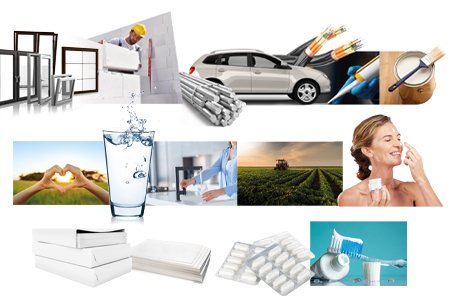

- The use of lime is at the beginning of a large number of industrial value chains in Germany and Europe.
- Regional lime production with high quality standards secures our customers' supply chains and contributes to local value creation.
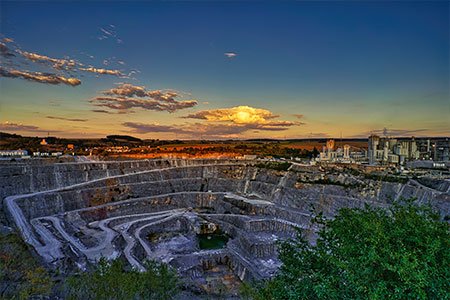
- Supplying our plants with raw materials from our own quarries and our regional proximity to our customers are also important factors in reducing emissions. This avoids long-distance truck transports and reduces CO2 emissions.
Where possible, we deliver large quantities by rail.

Scope 3
Up- and downstream processes
Emissions from Upstream and Downstream Processes
In addition to the CO₂ emissions directly caused by our production processes or the electricity we use, we also consider the emissions generated outside our own operational boundaries as a result of our activities. In 2021, these accounted for around 10% of our total emissions.
When addressing upstream and downstream emissions, we focus on the main contributing factors. These
include the climate impact associated with the production of the fossil and renewable energy sources we use, as well as the procurement of lime products as traded goods.
Upstream emissions from natural gas and coal use
The extraction, processing and transport of fuels for lime production generate emissions due to energy or fuel requirements. These upstream emissions vary
depending on the type of fuel and its origin. Natural gas extraction causes the highest emissions, while the provision of wood pellets has relatively low
emissions. The gradual conversion of our kilns to renewable fuels will also reduce the corresponding upstream emissions.
Purchased lime products
In addition to our own production, we also use and distribute lime and dolomite products from other manufacturers. We work closely with our partners to ensure that they too are decarbonising their production processes, so that the emissions from our purchased products will gradually decrease.
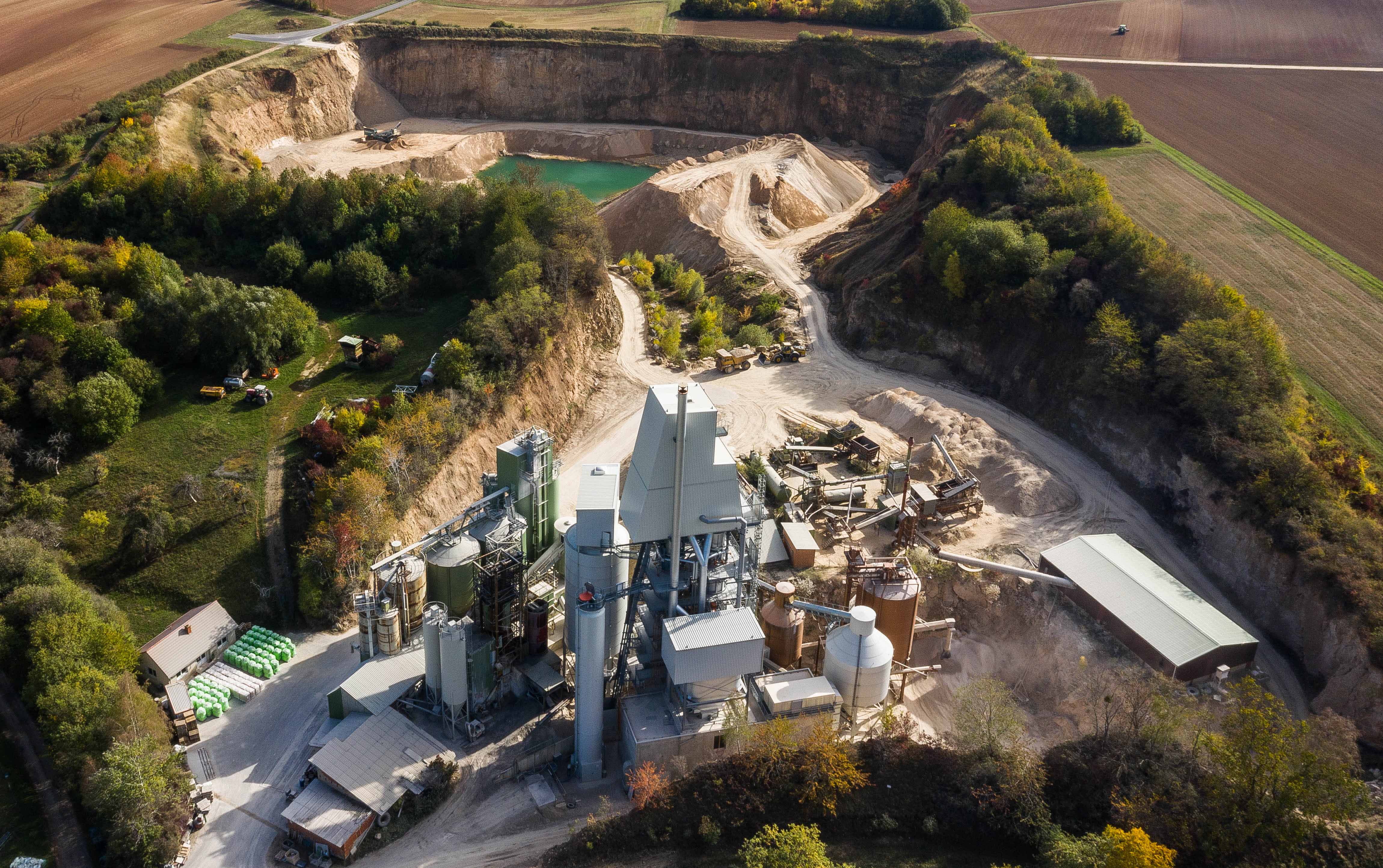
Our partner, who supplies the dolomite lime used in our production, is already investing in the decarbonisation of its processes. In 2025, it will commission a wood dust-fired kiln and reduce the CO₂ emissions required for dolomite production by more than 25%.
Outgoing transport and distribution
We work with external freight forwarders to transport our products. Local raw
material supply and proximity to our customers contribute significantly to reducing emissions. This avoids long truck transport routes and noticeably reduces CO₂ emissions. Where possible, we deliver large quantities by rail.
The freight forwarders are also already achieving savings by using gas-powered vehicles. In future, emissions are to be further reduced through the increased use of electric vehicles.
We work closely with freight forwarders and customers to test and sustainably
implement innovative and low-emission transport solutions.
Capital goods
The manufacture and transport of the machinery and equipment generate
emissions. Where possible and appropriate, we work with our suppliers to develop solutions that reduce emissions.
Business travel
To reduce emissions caused by business travel, we replace face-to-face meetings with online meetings wherever reasonable and possible.
For necessary travel within Germany, we prefer to use rail as our mode of transport and are increasingly relying on electric vehicles in our fleet.